Building homes from the floor up
Up to 3 FREE Samples
Luxury Vinyl Tile (LVT) has become one of the most popular modern flooring choices for busy homes and commercial spaces, and it’s easy to see why. It’s stylish, durable, and often marketed as waterproof but does that mean it can never suffer from water damage? In this guide, we’ll break down exactly how LVT reacts to moisture, where its strengths and limitations lie, and what you can do to keep your floor in top condition for years to come.
When people ask “what is LVT flooring?” The simplest answer is that LVT flooring (Luxury Vinyl Tile or Plank) is a synthetic flooring solution made up of multiple engineered layers. Typically, it includes a strong core layer, a high-resolution printed design layer that mimics natural materials like wood or stone, and a tough protective wear layer on top.
Unlike laminate or hardwood, LVT contains no real wood fibres. This is a key reason it performs so well in moisture-prone environments. Some modern products use an SPC flooring (Stone Plastic Composite) core, which adds extra rigidity and stability, making it even more suitable for high-traffic or wet areas.
Installation methods also vary. You’ll commonly find click-fit systems such as LVT click flooring, or fully bonded glue-down systems, both of which influence how the floor responds to water exposure.
So, is LVT flooring waterproof? In short, yes the planks themselves are generally waterproof. This is a common question, and the answer is that the material won’t swell, warp, or absorb moisture like wood or laminate flooring would.
However, there’s an important distinction to make: LVT flooring waterproof does not mean your entire floor system is immune to water. While the planks resist moisture, water can still find its way through joints, edges, or poorly sealed fittings if spills are left untreated.
This is why flooring specialists often explain the difference between water-resistant and fully waterproof systems. LVT sits firmly in the “highly water-resistant to waterproof surface” category but it still relies on correct installation and maintenance to perform at its best. So, while the question “is LVT waterproof or water resistant” might depend on context, it is generally considered highly resistant with waterproof surface properties.
When comparing installation types, it’s important to understand how each behaves under moisture exposure.
With click LVT waterproof systems, the planks lock together using a floating installation method. While this creates a tight seal, the joints can still allow water to seep through if spills are left standing for long periods.
On the other hand, glue down LVT waterproof systems rely on adhesive to bond the flooring directly to the subfloor. A properly installed glue down LVT floor can offer improved resistance to water ingress because there are fewer hollow spaces beneath the surface. However, if the adhesive is compromised, moisture can become trapped underneath, leading to issues over time.
Using a high-quality waterproof LVT adhesive is essential in both cases, especially in areas prone to spills. Regardless of installation type, sealing expansion gaps around edges and fixtures is key to long-term performance.
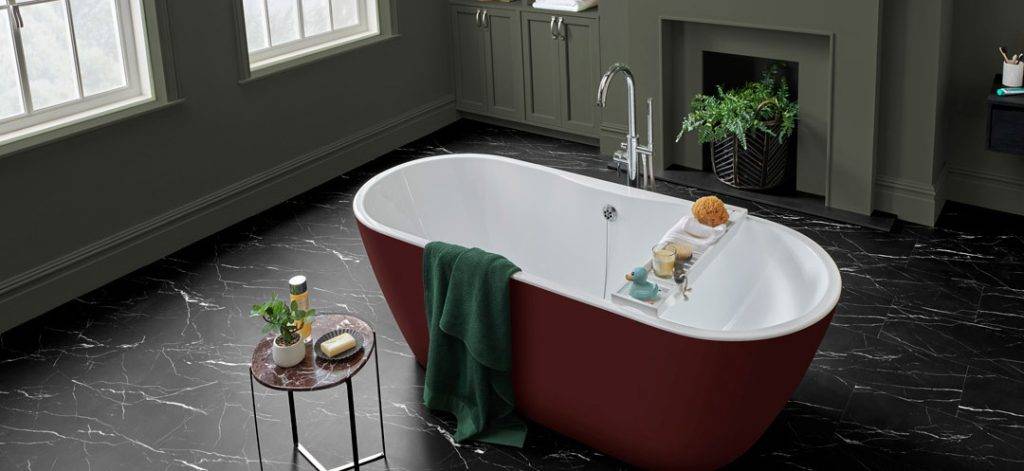
One of the biggest advantages of LVT bathroom flooring is its suitability for wet environments. In fact, waterproof LVT bathroom flooring has become a go-to option for homeowners wanting a practical yet stylish alternative to ceramic tiles.
The same applies in kitchens, where LVT kitchen flooring offers comfort underfoot and excellent moisture resistance compared to traditional materials. Many homeowners also choose waterproof vinyl flooring for bathrooms because it combines practicality with a wide range of design options.
For added performance, SPC flooring is often recommended in these areas due to its rigid core and enhanced stability. When installing LVT in bathrooms or kitchens, it’s essential to seal around baths, toilets, and kitchen units using silicone rather than leaving open edges. A suitable underlay may also be recommended depending on the product.
Although LVT is highly water-resistant, issues can arise if moisture gets underneath the surface. Signs of LVT flooring water damage may include lifting edges, bubbling, a spongy feel underfoot, or discolouration around joints.
The main concern isn’t usually the planks themselves but the subfloor beneath. Prolonged moisture exposure can damage timber or chipboard bases, encourage mould growth, and weaken adhesives.
This is why it’s important to understand that the question “is all LVT flooring waterproof?” is not a simple yes-or-no. The surface may be waterproof, but trapped moisture underneath can still cause structural problems if not addressed quickly.
If you notice early signs of damage, quick action can often prevent more serious issues. For minor problems such as edge lifting, affected tiles can usually be removed, the subfloor dried thoroughly, and replacements installed.
In cases of more significant LVT flooring water damage, where large areas are affected or the subfloor has been compromised, a full removal and repair may be necessary before reinstalling new flooring.
The key is speed standing water should never be left beneath any flooring system. If you’re dealing with moisture issues, products like waterproof LVT click flooring can be reinstalled once the subfloor is fully dry and stable.
Choosing waterproof LVT flooring for bathrooms from the outset can significantly reduce future risks, especially when installed correctly by experienced professionals.
For tailored advice or replacement options, Luvanto can help you choose the right solution for your space and ensure a long-lasting finish.
LVT is one of the most practical flooring choices available today, especially for kitchens, bathrooms, and busy family homes. While it offers excellent moisture resistance, it is not completely immune to problems caused by standing water or poor installation.
The real secret to long-lasting performance lies in correct fitting, proper sealing, and quick attention to spills. When installed well, LVT delivers a durable, attractive, and highly water-resistant surface that stands up brilliantly to everyday life.
If you’re considering upgrading, explore Luvanto’s range of LVT flooring options to find a solution that combines style, performance, and peace of mind.
Recently Viewed
Related Articles
Discover the everyday activities that can damage your floors
Taskers of Accrington 3,000m² Luvanto Flooring
Looking for a Home Refresh? How to Design a Room Around Your LVT Flooring
From Ordering a Sample to Installation: Your Complete Guide to Choosing LVT the Luvanto Way
The Luvanto Difference: What Makes Our LVT Flooring Stand Out
The Ultimate LVT for Kitchens: Why Black Marble & Oyster Marble are the Perfect Choice
Clay Earth
Midnight Olive
Coastal Cottage

Trends come and go but a Luvanto floor is forever.
Keep your interiors looking show-home worthy with our colour and trend inspiration. As experts in colour forecasting and pairings, we match the latest trends and colours with each of our flooring shades so you can stay tickled pink with your décor all year round.
Flooring
Inspiration
Where To Buy
Help And Support
Copyright © 2026 Luvanto - QA Flooring Solutions Ltd. All Rights Reserved.
QA Flooring Solutions Ltd is a company registered in England
Registered Office: Unit 2 Hurricane Drive, Speke, Liverpool, L24 8RL
Company Registration Number: 07870268 | VAT Number: 852026449
| Cookie | Duration | Description |
|---|---|---|
| cookielawinfo-checkbox-analytics | 11 months | This cookie is set by GDPR Cookie Consent plugin. The cookie is used to store the user consent for the cookies in the category "Analytics". |
| cookielawinfo-checkbox-functional | 11 months | The cookie is set by GDPR cookie consent to record the user consent for the cookies in the category "Functional". |
| cookielawinfo-checkbox-necessary | 11 months | This cookie is set by GDPR Cookie Consent plugin. The cookies is used to store the user consent for the cookies in the category "Necessary". |
| cookielawinfo-checkbox-others | 11 months | This cookie is set by GDPR Cookie Consent plugin. The cookie is used to store the user consent for the cookies in the category "Other. |
| cookielawinfo-checkbox-performance | 11 months | This cookie is set by GDPR Cookie Consent plugin. The cookie is used to store the user consent for the cookies in the category "Performance". |
| viewed_cookie_policy | 11 months | The cookie is set by the GDPR Cookie Consent plugin and is used to store whether or not user has consented to the use of cookies. It does not store any personal data. |
Building homes from the floor up
Up to 3 FREE Samples